Cloudier and The Story Beneath Their Songs (Part 1)
A deeper dive into the EDM group band Cloudier, from their lyrical content to the narrative lurking behind each songs.

A deeper dive into the EDM group band Cloudier, from their lyrical content to the narrative lurking behind each songs. Disclaimer: This analysis is just from my perspective, and not everything in this post is 100% correct or claimed to be the intention of the artists in the first place.
Cloudier, the EDM duo comprised of Cloudifield (Mididuck) and Reichuu (Jelly), have created a series of interconnected songs that, when analyzed chronologically, reveal a profound narrative journey. While most electronic music projects focus primarily on creating individual tracks designed for emotional impact or danceability, Cloudier appears to have crafted something more ambitious—a conceptual album told across multiple releases that potentially explores the human psyche with remarkable depth and nuance.
This analysis explores how their songs weave together to tell a cohesive story of escape into fantasy, confrontation with reality, mental health struggles, and ultimately, healing and growth. By examining the lyrical content, emotional progression, recurring motifs, and musical elements across their work, we can uncover a narrative that transforms seemingly separate songs into chapters of a single, powerful story.
Act 1: Escape into Fantasy
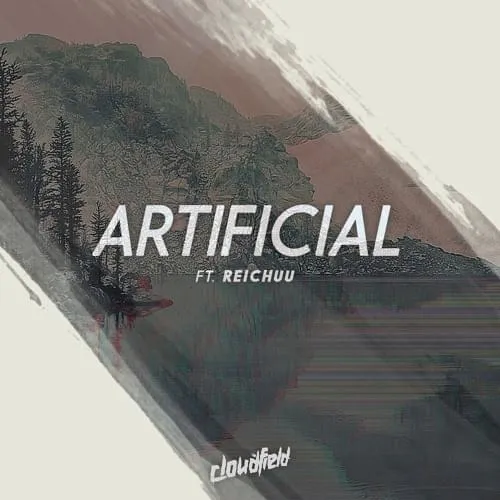
Song 1: Artificial (Cloudfield ft. Reichuu)
"Artificial" serves as the crucial entry point to Cloudier's narrative, introducing the fundamental tension between reality and fantasy that will drive the entire story. Released under "Cloudfield ft. Reichuu" rather than the Cloudier name, this positioning hints at the fragmentary state of the protagonist's psyche—not yet fully integrated into a cohesive identity, much like the artists' collaboration itself.
The song opens with an immediate expression of conflict:
"I'm holding on to this world
But somehow everything feels so surreal"
These first lines establish the dissociative experience that forms the core of Rei's struggle. "Holding on" suggests both effort and precariousness—she is actively trying to maintain her connection to reality but finding it difficult. "Everything feels so surreal" indicates derealization, a common symptom of various mental health conditions where reality itself feels dreamlike or artificial. This opening immediately places us within Rei's subjective experience rather than describing her circumstances objectively.
The next lines deepen this sense of dissociation:
"I'm holding on to thin air
Until now I can't tell if you're there"
"Holding on to thin air" suggests that what she thought was solid support is actually insubstantial—perhaps a relationship or belief system that has collapsed. "I can't tell if you're there" introduces ambiguity about whether she's addressing a real person who has become distant or an imaginary figure she can no longer clearly perceive. This blurring between real and imagined relationships becomes a central theme throughout the narrative.
"My trembling arms and trembling frame
Can't shake my aim can't shake my game"
The repetition of "trembling" emphasizes physical manifestations of anxiety or withdrawal, grounding the psychological experience in bodily sensation. Yet despite this physical instability, she asserts determination—"can't shake my aim can't shake my game"—suggesting both resilience and possibly denial. This contradiction between her deteriorating state and her insistence on maintaining course creates dramatic tension.
The chorus delivers the core emotional revelation:
"Just let me go
I'm losing control"
Unlike later songs where she resists returning to reality, here Rei appears to be pleading to be released from something—possibly a maladaptive coping mechanism or fantasy world that once felt controlled but now feels controlling. "I'm losing control" suggests that what began as a voluntary escape has taken on a life of its own, a common experience with dissociative coping mechanisms.
"Open up your eyes and see
This whole new reality"
The command to "open up your eyes" could be directed at herself or at the figure she's addressing, blurring the line between internal dialogue and external communication. "This whole new reality" suggests that rather than returning to a previous stable reality, she's entering an altered state—either emerging from fantasy into a reality that now seems new after prolonged dissociation, or perhaps entering a different fantasy altogether.
"My hold on to this dream
Is slipping, I'm bursting at the seams
I just want to be free
From this artificial world I'm in"
These lines reveal that Rei recognizes her situation as a "dream" and an "artificial world"—showing awareness of her dissociation that will temporarily disappear in later songs. "Bursting at the seams" creates a powerful image of internal pressure threatening to rupture her carefully constructed defenses. The desire to "be free" positions the artificial world as a prison rather than a refuge, establishing the paradoxical nature of maladaptive fantasies—they begin as escape but become confinement.
The repeated refrain emphasizes her increasingly desperate state:
"I'm losing control
I just want to be free
I'm losing control
I just want to be free"
This repetition mimics the circular thinking often experienced in anxiety states, while the alternation between "losing control" and wanting freedom suggests she sees these as connected—perhaps recognizing that true freedom requires surrendering the illusion of control provided by her fantasy world.
Within the overall narrative, "Artificial" establishes Rei's starting point—someone aware of her dissociative tendencies and expressing desire to break free, yet struggling with the process. This creates an interesting tension with "Fantasy," where this awareness seems to recede as she becomes more deeply immersed in her imaginary world.
Song 2: Fantasy (Cloudier)
"Fantasy," as the first song released under the Cloudier name, represents a significant development in both the artistic collaboration and the narrative. The more unified artist identity parallels Rei's deeper integration with her fantasy world—no longer seeing it as artificial but embracing it as preferable to reality.
The song begins not at the start of her fantasy but at its threatened conclusion:
"The sky is fading now
We're grounded to the ground
And I grab your hand and say
'We'll meet another day, okay?'"
The next lines reveal her confusion about the boundary between fantasy and reality:
"I don't know if I am dreaming
But it's seeming like a feeling
Much too real to be imaginary"
Unlike in "Artificial" where she recognized her "artificial world," here she questions whether she's dreaming at all. The emotional intensity—"a feeling much too real"—has become her measurement of reality, replacing objective criteria. This represents a dangerous shift in her epistemology: what feels real must be real, regardless of evidence to the contrary. This is characteristic of maladaptive daydreaming and fantasy proneness, where the vividness of imagined experiences can rival or exceed actual ones.
The imagery becomes more enveloping:
"The sky is fading now, we're wrapped inside a cloud
And I hold you too close to me
And hope that you'll be free
With me"
The "cloud" creates a cocoon-like environment separating them from reality. "Hold you too close" suggests both intimacy and possessiveness—she's clinging to this fantasy figure. The hope that "you'll be free / With me" contains a central contradiction: true freedom cannot coexist with the kind of possession and control her fantasy enables. This paradox—seeking freedom through imprisonment in fantasy—drives much of the subsequent narrative.
"I don't know if you remember
But I told you last summer
'You're the only one I'll ever need'"
The creation of detailed temporal markers ("last summer") demonstrates how elaborate her fantasy world has become—it has its own history and continuity. "The only one I'll ever need" reveals the function of this fantasy relationship: it meets all her emotional needs, eliminating the complexity and compromise required in real relationships. This totalizing quality makes the fantasy both powerfully appealing and ultimately limiting.
The chorus delivers the central declaration of her new orientation:
"So I said
'Hey, I never wanna be awake again'
But you said
'Say, I'm not your only friend'"
This represents a complete reversal from "Artificial," where she wanted to be free from the artificial world. Now she "never wanna be awake again"—preferring permanent immersion in fantasy to reality. The imagined response—"I'm not your only friend"—suggests her fantasy figure has developed agency and complexity within her imagination, possibly representing a part of her psyche that recognizes the unhealthy nature of her attachment.
"Now every day
Every second with you
I'll be okay
So now I'll say
'You were never just a friend'"
These lines reveal the emotional dependency that has developed—her well-being ("I'll be okay") has become contingent on maintaining the fantasy relationship. "You were never just a friend" suggests romantic or intimate dimensions to the fantasy, which serves to meet needs that actually require authentic connection in reality.
The chorus intensifies with desperate pleas:
"No, don't let go of me
At last, you're here with me
No, don't let go of me
You're reality"
The repetition of "don't let go of me" reveals her terror of separation from the fantasy figure. "At last, you're here with me" suggests a sense of fulfillment or completion that has eluded her in reality. Most tellingly, "You're reality" demonstrates complete inversion of her perception—the fantasy has become more real to her than reality itself. This represents the pinnacle of her dissociation and the greatest threat to her psychological health.
Act 2: Deepening Immersion and Recognition of Illusion
Song 3: A Centimetre Apart
This song represents a pivotal moment in Rei's journey, exploring her deepening awareness of the impossible nature of her fantasy relationship while simultaneously showing her increasing dependence on it.
The title itself—"A Centimetre Apart"—embodies the cruel paradox of her situation. A centimeter is such a small distance physically, yet represents an unbridgeable emotional and metaphysical chasm between fantasy and reality.
"Your voice takes a form I'll never be able to hold
Yet your presence seems to shelter me from the cold"
These opening lines immediately establish the duality Rei experiences. Her fantasy lover provides emotional warmth and protection that she lacks in reality, despite being fundamentally intangible. The juxtaposition of "never be able to hold" with "shelter me from the cold" captures her emotional conflict—she receives genuine comfort from something that isn't real.
"But like the glitter in a snow globe we'll eventually fall
Despite the beauty surrounding it all"
This metaphor is particularly revealing. A snow globe creates a perfect, contained miniature world—just like Rei's fantasy. The glitter suspended in the snow globe seems to defy gravity temporarily but must inevitably fall. Similarly, Rei understands that her fantasy world cannot be sustained indefinitely, regardless of how beautiful it appears.
"We're just a centimetre apart
But that's the gap I can't close between our hearts
We're two worlds destined to never meet
And you're the one I'll never reach"
The chorus perfectly articulates the central tension of her situation. The "centimetre apart" metaphor brilliantly captures proximity without possibility—so close she can almost touch it, yet fundamentally unreachable. "Two worlds destined to never meet" suggests she has gained insight into the ontological impossibility of her situation. Reality and fantasy exist in separate dimensions that cannot be reconciled.
"This time we have may only be temporary
But on the contrary are these feelings that I harbour for you"
Here Rei draws a crucial distinction between the temporary nature of her fantasy world and the permanence of her genuine emotions. This reveals a sophisticated understanding of her own psychology—she recognizes that although the object of her affection isn't real, her feelings themselves are authentic. This complicates her ability to let go, as abandoning the fantasy feels like betraying real emotions.
"My only fear is the fear of losing you"
This line marks a significant regression from her desire to be "free from this artificial world" expressed in "Artificial." Now her greatest fear is not remaining trapped in fantasy, but losing it altogether. This suggests her dependency on the fantasy has deepened despite her awareness of its artifice.
"You can leave but please don't leave me in the dark
I know you'll never see me that way
But I hope you'll stay, just for one more day"
The pleading tone here reveals Rei's increasing desperation. "Leave me in the dark" suggests that losing her fantasy would leave her without any light or guidance in her life. "Just for one more day" shows her bargaining, a common stage of grief, as she begins to recognize she may need to eventually let go. This bargaining—"just one more day"—will become a pattern, as she continuously delays the painful process of returning to reality.
"Why do I still persist this love that can't exist
I know that all this'll do is leave a scar
But that only gives me a reason to reminisce"
The final verse represents a profound moment of self-awareness. Rei openly questions her own behavior while simultaneously justifying it. She knows her attachment is causing psychological damage ("leave a scar") yet reframes this harm as valuable—scars become souvenirs of an experience she can revisit through memory. This rationalization allows her to continue her self-destructive pattern while acknowledging its harmful nature.
The song concludes with this tension unresolved. Rei has attempted to "break free" from her fantasy temporarily, only to have reality hit her so hard that she retreats further into her illusion for protection. This represents a significant backslide in her journey—she now consciously chooses the comfort of fantasy over the pain of reality, despite understanding the ultimate impossibility of her situation.
This creates the perfect narrative set-up for "Our Story," where Rei will need to find a more sustainable path forward from this emotional impasse.
…To be continue
Read more at: Lazzerex’s Blog
Source: Published Notion page
This article
Post Reactions
Join the conversation
Write a Comment
Share your thought about this article.
Comments
Loading comments...