How Zelda Revolutionized Game Saving
Go through the entire history of game saving and the technology behind it.

This blog is inspired by NesHacker, a really amazing YouTube channel with in-depth scrutinization of the NES and much more. Please give them some support: https://www.youtube.com/@NesHacker
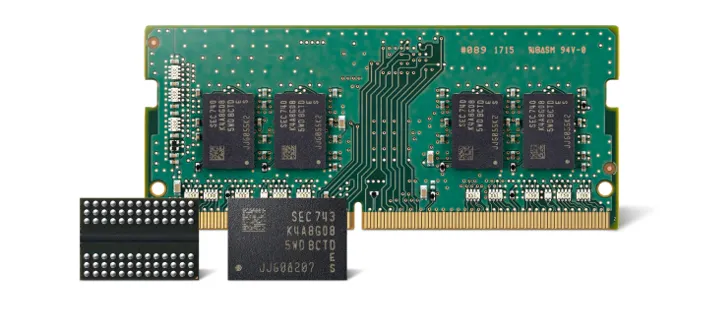
SRAM and DRAM
- SRAM (Static Random Access Memory) retains data bits in its memory as long as power is being supplied. It doesn't need to be refreshed regularly like DRAM
- DRAM (Dynamic Random Access Memory) on the other hand, stores each bit of data in a separate capacitor within an integrated circuit. The information is constantly refreshed to keep the data. This constant refreshing, however, means that DRAM uses more power than SRAM.
How Zelda Saves Your Game
- How do early video games save your game?
For PC gaming, “Password System” is used (like Ultima I): Saved data is then written on floppy discs.
This was not the case for consoles.
For the game Survival Island 1983 on the Atari 2600, they used a series of passwords that served as checkpoints. Simply type in a string of numbers to get to a different part of the game.
⇒ Easy for players to mess up.
- What was Nintendo’s solution?
The game Zelda 1984 (development phase) luckily was made for a system that had 3 writable floppy discs
In 1986, Nintendo released the Famicom Disk System, that allowed consoles to play games from disks cards
These disks have the ability to hold more data than the ROM chips of the game cartridges and are also completely rewriteable
For the first time ever, a console game could create save files like a PC game. The biggest feature of The Legend of Zelda was that you could save your game progress directly onto the game disk.
… And it was even faster than saving on PC back then (where you would need to write a save command, choose the save path, etc,…).
- A Leap Forward for Console Gaming
But this system is not without problems. (in comparison with the Cartridges game)
It took longer to load and the disks themselves are quite delicate
Disks games are also easier to pirate.
- Problems arises
Plummeting semiconductors prices
Piracy problems
Mapper chips development obsolete the hardware in the disks system in 1987
- Pops and Chips (1985)
Released on the Super Cassette Vision
Used the battery-backed SRAM to persist data
The cartridge was designed to use 2 slots of AA battery, which are connected to a diode circuit.
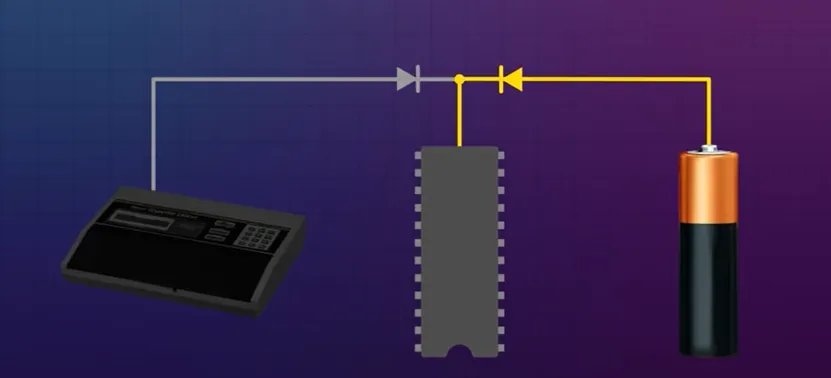

Unlike DRAM, contents in SRAM don’t need to be constantly refreshed
Nintendo did just this for the cartridge version of Zelda
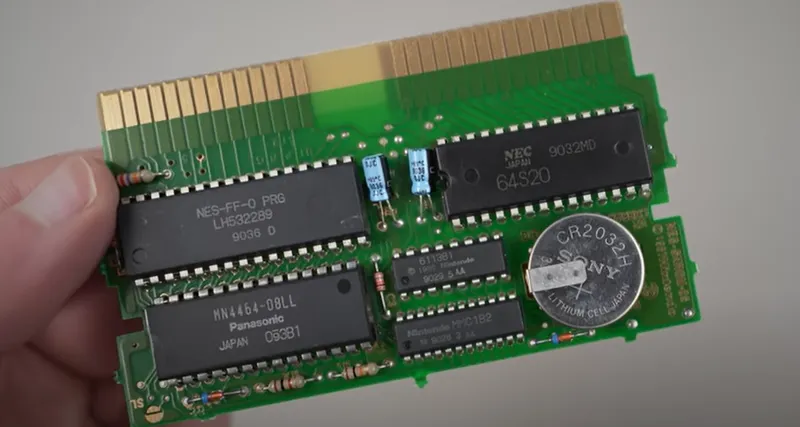
Instead of 2 AA batteries, they used a small coin battery on the PCB
- Changes in the saving system
Famicom disks system: loading game program’s codes from floppy disks to a 32KB bank of memory
The cartridge system works quite differently from this.
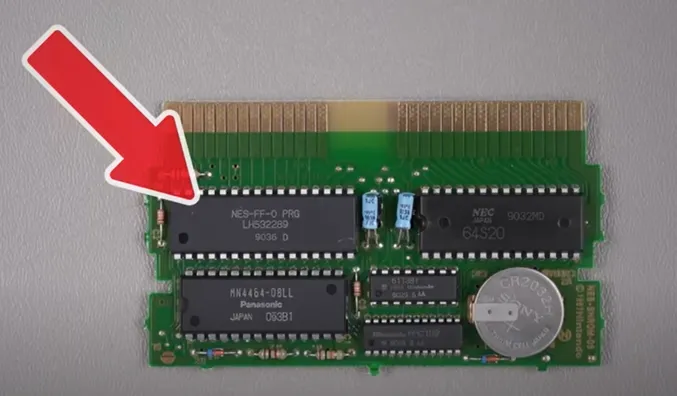
It utilized a Program ROM chip (PRG-ROM) and Memory Mapper chip (MMC1)
Instead of loading and writing on RAM chip, the MMC1 selects active banks on the PRG-ROM which is connected to the console system’s main addresses and data buses.
The game program controls the Mapper by sending data to special memory addresses allowing to access different pages of date while the game’s running
An interesting thing to note is the SRAM chip is basically as fast to access and update as the system’s main memory
Zelda could have been the first game with a continuous real time save in the US.
- Conclusion
Battery-backed SRAM is way faster than disks system.
Reading and Writing to Magnetic Disks is much slower than accessing RAM.
Source: Published Notion page
This article
Post Reactions
Join the conversation
Write a Comment
Share your thought about this article.
Comments
Loading comments...