The Girl From The Other Side
An exploration of folklore, memory, and separation in The Girl from the Other Side: Siúil, a Rún, and how its quiet storytelling and themes turn a simple premise into something timeless.
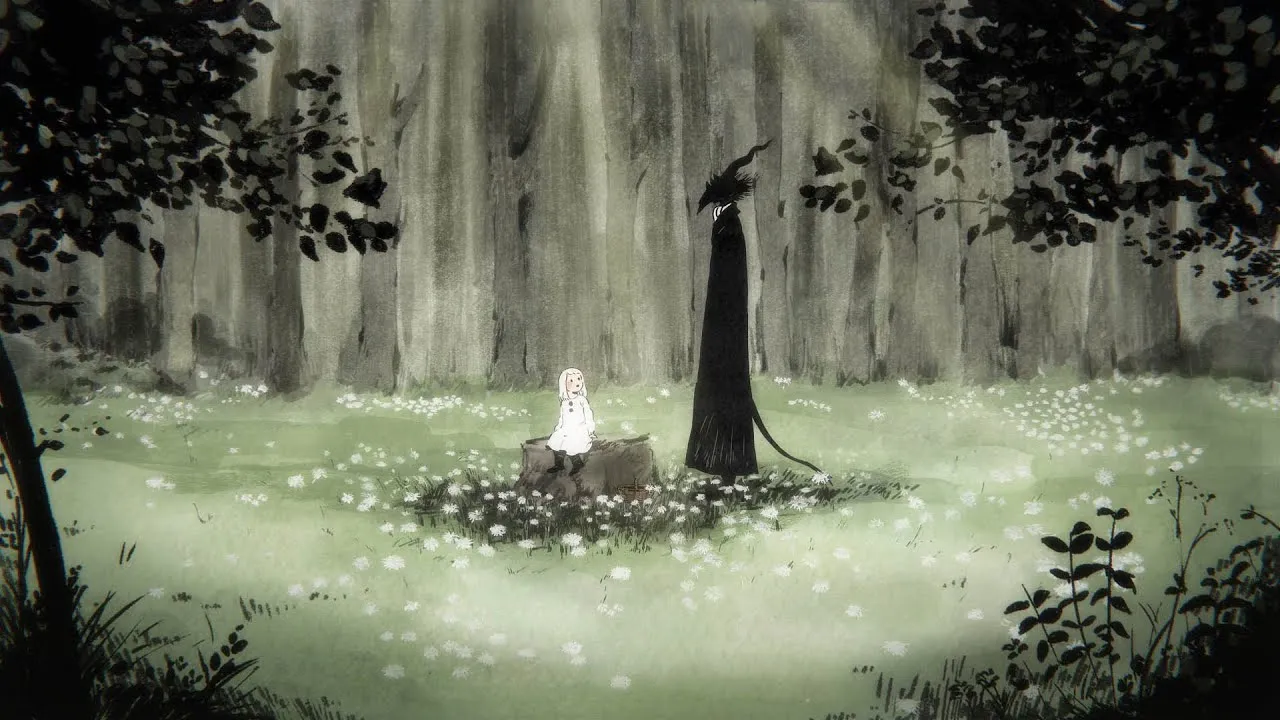
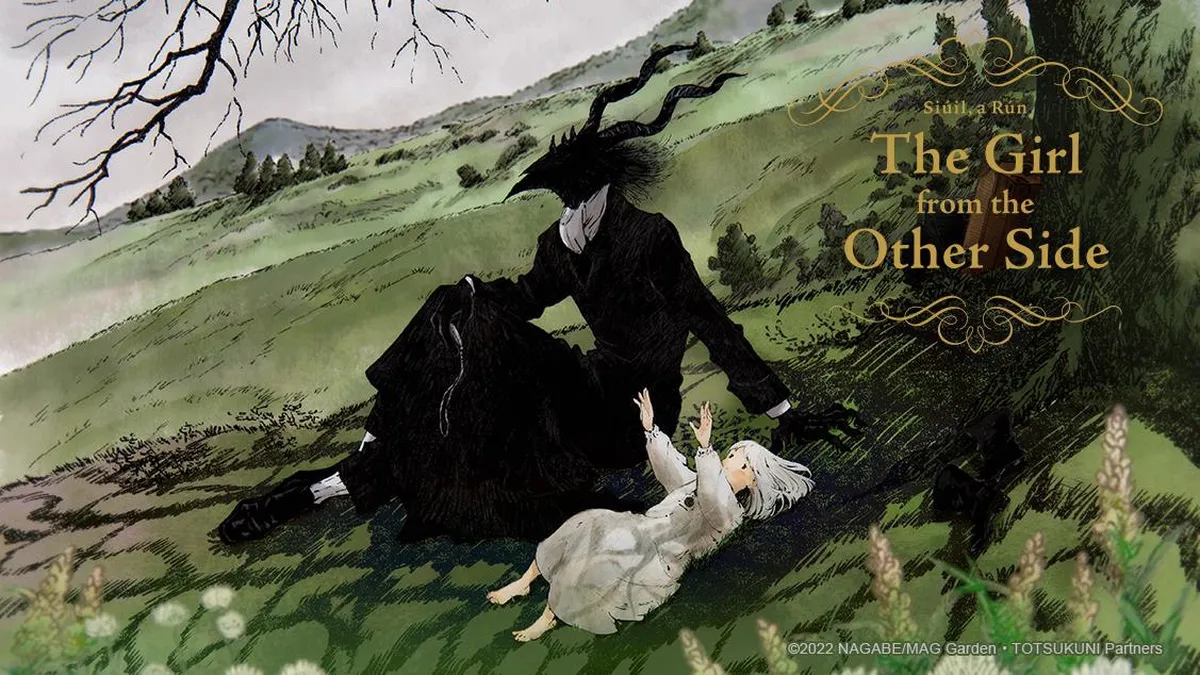
There is a particular kind of story that feels less like something written and more like something remembered. Not remembered by you specifically, but by the world in some older, quieter way, the way folk songs carry grief across centuries without anyone needing to explain why they still hurt. Nagabe's "The Girl from the Other Side: Siúil, a Rún" is that kind of story, and even after finishing it, even sitting with all its vagueness and its strange, unresolved cosmology, that feeling doesn't go away.
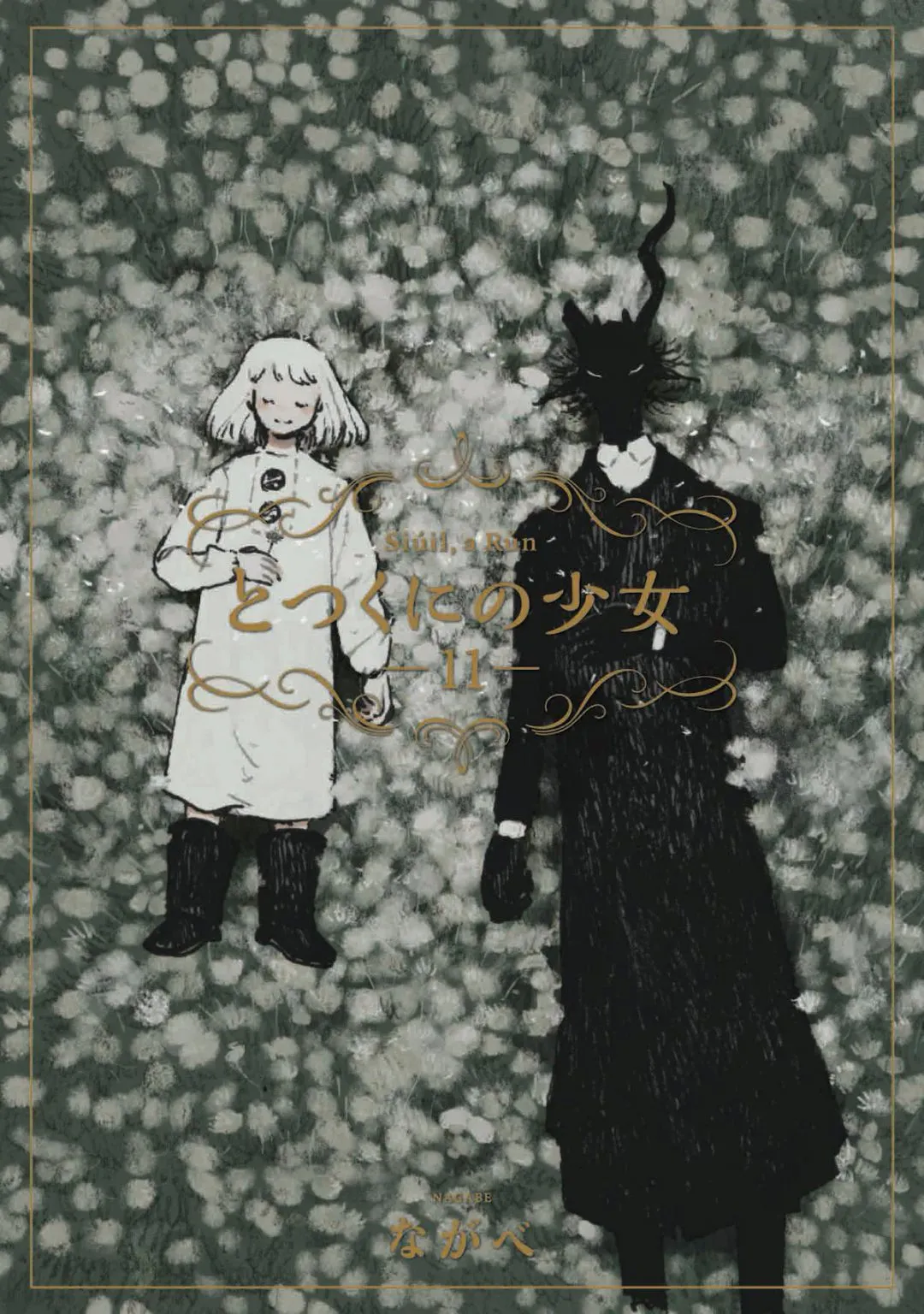
The manga follows Shiva, a six-year-old girl abandoned in the "outside" by an old woman she calls her auntie, and Teacher, an Outsider who finds her and takes her in. In the world of this story, the outside is cursed territory, inhabited by black-bodied, skull-faced creatures who were once human and who spread their curse through touch.
The inside is where people live, shrinking year by year as the curse expands and soldiers carry out purges of anyone suspected of contact.
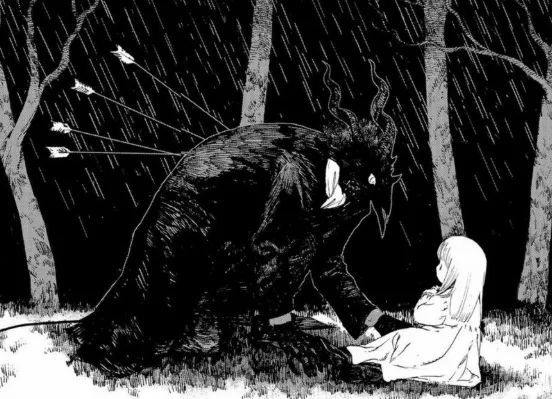
Teacher is different from the other Outsiders, more humanlike, more conscious, though he has no memories of who he was before. The two of them form a makeshift family in an abandoned house, and Teacher watches over Shiva every day knowing he can never touch her, knowing she is waiting for someone who will not return.
That premise alone carries an enormous weight. But what Nagabe does with it over eleven volumes is something quieter and stranger than a straightforward tragedy. The worldbuilding is genuinely vague in places, more mythological in its logic than mechanical, and the ending is deliberately open in ways that left many readers uncertain about what exactly happened. There is a reason for that, and it connects directly to what kind of story this is trying to be.
The subtitle is worth pausing on. "Siúil, a Rún" is a traditional Irish folk song, one of those pieces of music old enough that its origins blur into oral tradition. It is a farewell song at its core, sung from the perspective of someone watching a beloved leave, wishing them safety across the water. Nagabe chose this as the subtitle for the entire manga, which is not a casual decision. It tells you from the very first volume that this is a story about longing across an unbridgeable distance, about care that cannot close the gap between two people no matter how genuine it is, and about the particular tenderness of a farewell that keeps being deferred.
The anime adaptation's ending theme, "Touch of Hope" performed by Yui Makino, carries this through in a way worth examining carefully, because the song essentially contains the manga's emotional conclusion before you reach it. The track opens with lines drawn directly from "Siúil, a Rún," and that choice immediately grounds everything in the folk tradition the manga's title invokes.
I wish I was on a yonder hill ‘Tis there I’d sit and cry my fill ‘Til every tear would turn a mill Is go dté tú mo mhuirnín slán
The image in those opening lines is of someone sitting on a hill weeping so completely their tears could power a mill, and then sending their beloved off safely. It is grief that is also generosity, sorrow that still manages to wish the other person well. That emotional texture is everywhere in Teacher and Shiva's relationship. Teacher cannot tell Shiva she has been abandoned. He watches her wait, day after day, and his care for her is expressed almost entirely through restraint and presence rather than action. The folk song's voice is ancient and anonymous, which is part of what makes it work here. It suggests that what Teacher and Shiva share is not unique to their cursed world but belongs to something as old as people loving each other across distances they cannot cross.
From there, the song moves into Japanese, and that shift itself mirrors the manga's central duality between the inside and the outside, between the human and the vessel, between what can be held and what can only be witnessed from a distance.
森は風の記憶ですか — Is the swaying forest a memory of the wind? The first images in the Japanese lyrics ask whether a swaying forest is a memory of the wind, and this is a quietly precise way to describe Teacher's condition. Wind leaves no visible trace, and yet the forest bends because of it. You see the effect of something already gone. Teacher's memories were erased when the soul inside the black child was split, and yet something in him responds to Shiva in ways his conscious mind cannot explain or name. He behaves with love without being able to trace that love to its source. The forest does not remember the wind intellectually. It just moves.
割れた果実が運んだものは — What did the cracked fruit bring?
Following that, the lyrics ask what a cracked fruit brought with it, and the image works in a similar way. A fruit cracks open through damage, through falling, through being broken, and in that breaking it releases seeds. It carries life forward through its damage rather than despite it. The soul was split deliberately, and that splitting damaged both the black child and Albert, and yet the splitting is precisely what allowed Shiva to exist as a separate consciousness. The brokenness was generative. The crack was not a failure but an opening.
旅人は何を見つけるのでしょう — What would a traveler find?
星はその夢を満たしますか — Will stars fulfill your dream? Then the song asks what a traveler might find, whether stars can fulfill a dream, and here Shiva's voice comes through most clearly. She is literally a wanderer, abandoned in a world she was never meant to survive, and her hope throughout the manga is aimed at something that is not coming back. The question about stars is not cynical, though. It stays genuinely open, which is how the manga treats Shiva's hope as well, not as a delusion to be corrected but as something real and worth protecting even when it is pointed at the impossible.
おしえて、どうして — Tell me, why?
もしも終わりがあるのなら — If there is an ending The emotional hinge of the whole song arrives in a single phrase asking simply, "why?" After all the imagery and the natural metaphors, the song drops into something completely direct and childlike. Just the bare question underneath everything. It is the most Shiva moment in the entire track, and it lands because the manga earns it. Six years old, living in an outside world with a creature who cannot touch her, waiting for someone who left her behind, and the question is just: why is the world like this?
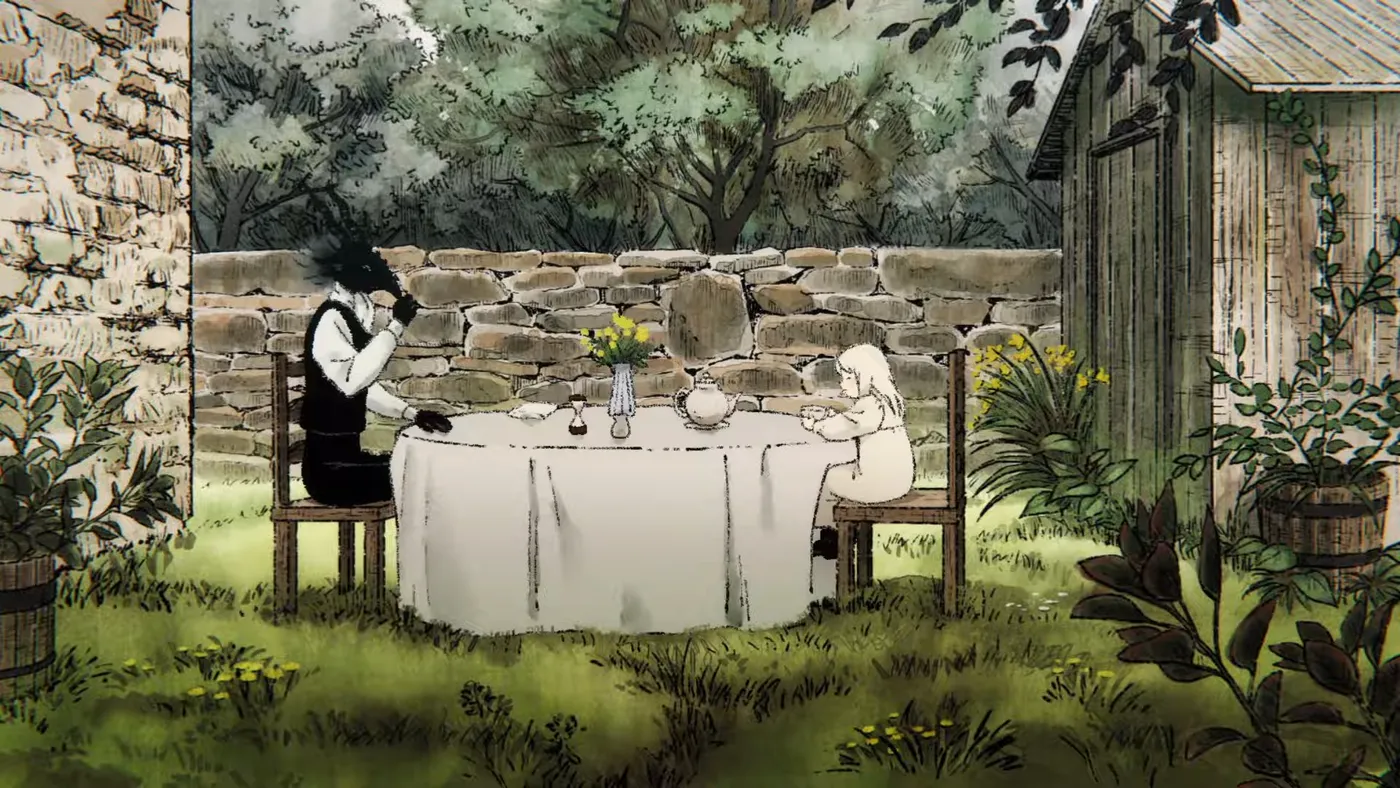
What follows is where the song becomes the manga's thesis in musical form. If there is an ending, the lyrics say, that is okay, as long as we can be as one. Not a rejection of the ending. Not a heroic refusal of mortality or decay. Just a quiet acceptance of it, conditional on togetherness. This is exactly what the final chapter depicts. Albert does not choose to preserve himself, does not choose the black child's utilitarian ultimatum. He chooses to share the soul, to be present with Shiva in whatever time remains. The song already told you this was the answer before you reached the chapter.
変わりゆく世界で変わらぬものを見つけた — In this ever changing world, I found something that doesn't change The line about finding something that does not change in an ever-changing world carries enormous weight given the manga's cosmology. Everything in this world is built around transformation and decay. The curse spreads, bodies become trees, souls are harvested and returned, the inside shrinks year by year. Entropy is the operating law. And yet the connection between Teacher and Shiva persists through all of it, through memory loss, through physical impossibility, through the fundamental rules of a world designed around division. Whatever this thing is between them, it does not obey the same logic as everything else.
ありがとう、荒野に響いた、こだまのように — Thank you, it resonated in the wilderness like an echo
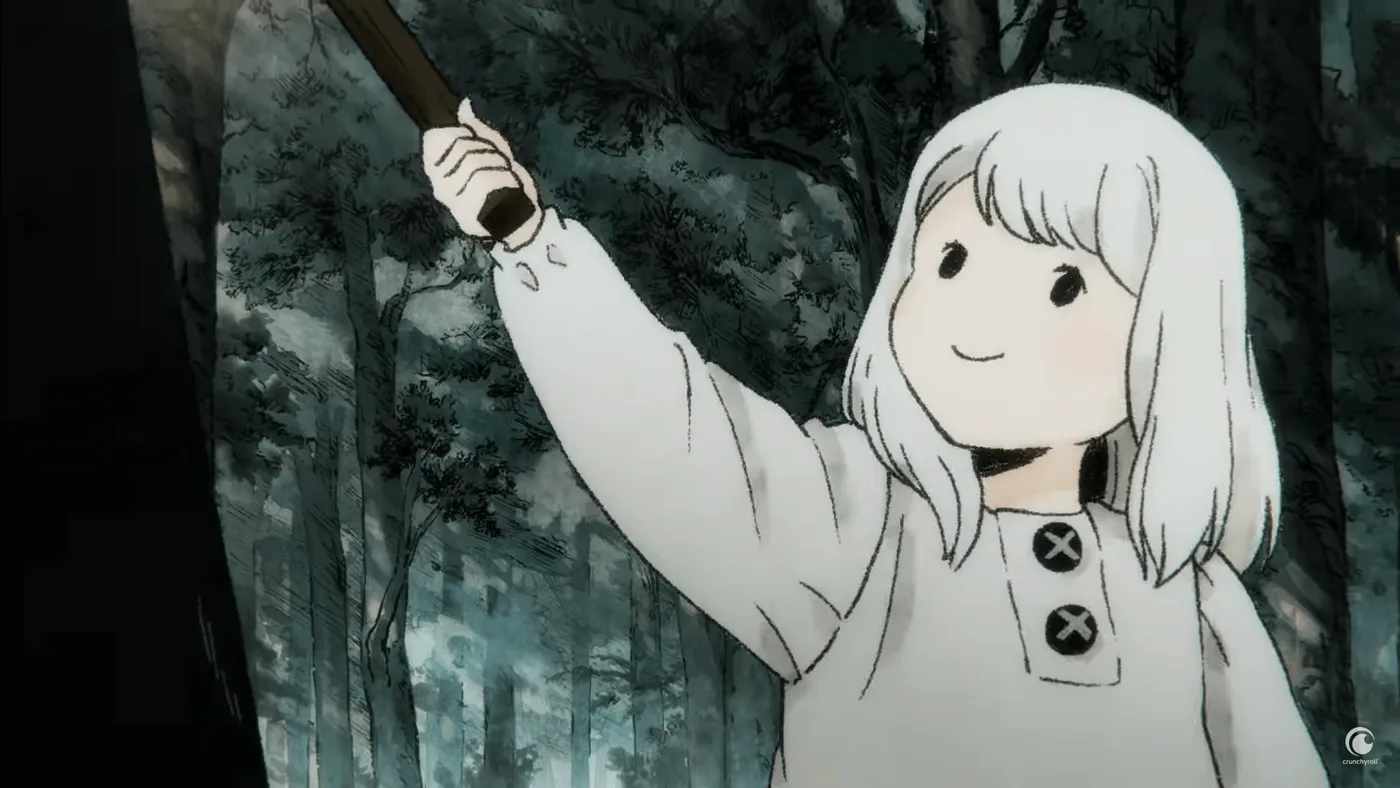
水鏡に映す、光の輪のように — It reflects like a ring of light on a mirror of water The closing images in the song are of an echo resonating in the wilderness and a ring of light spreading across still water, and both of these are doing the same thing from different angles. An echo returns something across distance, softer but recognizable, carrying the shape of an original sound through empty space. A ring of light on water moves outward from a single point of contact in perfect expanding circles, each one gentler than the last. Both images suggest that something small and genuine, a garland held between two hands in the grass, a soul shared rather than fought over, does not simply end when the moment ends. It spreads. It continues in the pattern it leaves behind. All of which brings us back to Nagabe's art, because none of this analysis quite captures what makes the experience of reading this manga feel the way it does. Nagabe's style is almost inseparable from the story's effect. The ink work is heavy and stark for the Outsiders, all that black against white, those empty skull faces that somehow manage to convey expression through posture and context alone. And then there is Shiva, drawn with this softness and warmth that makes her feel like something protected by the page itself. The contrast is everywhere and it never becomes a gimmick, because Nagabe uses it to make you feel the unbridgeable distance before you consciously register it. You see Teacher and Shiva together and you already understand the problem without needing it explained.
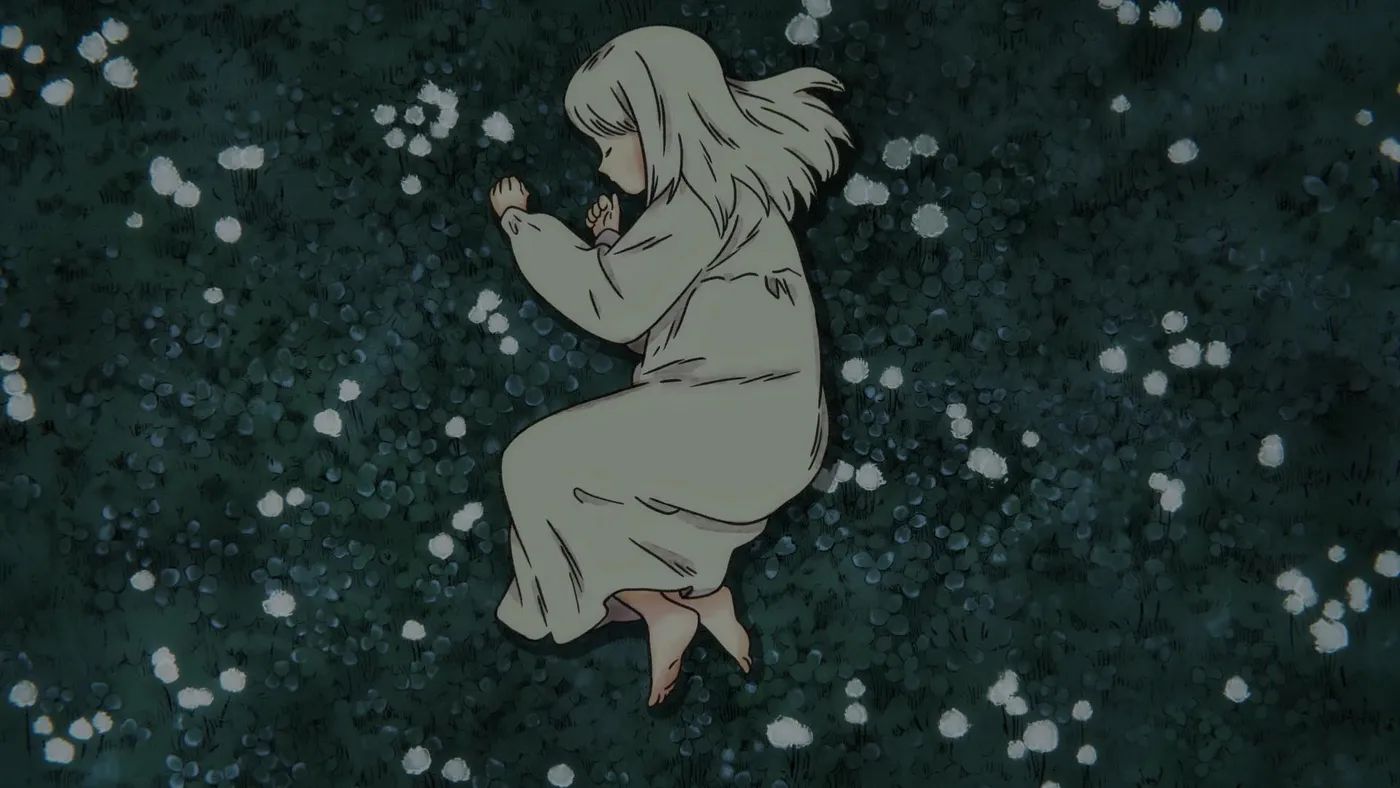
The art also carries the folklore quality of the story in a way that is hard to articulate but easy to feel. Reading it does not feel like reading a modern manga so much as turning the pages of something illustrated rather than drawn, something that belongs in a tradition of stories told by firelight where the rules of the world are felt rather than stated. The vagueness in the worldbuilding, which frustrated some readers, is part of this effect. You are not meant to fully understand the mother and the father, the inside and the outside, the mechanics of the curse. You are meant to feel the weight of them the way you feel the weight of rules in a fairy tale without needing them explained. This is a story where a creature with no memories and a child with no future find each other in a cursed forest and make something that looks, against all the logic of their world, like a family. The ending is ambiguous not because Nagabe ran out of answers but because the question it leaves you with is the right one, which is not "what happened next" but "what does it mean that they chose each other anyway." The song already answered that. In a world built around decay and division, something genuine and small can still resonate across the wilderness like an echo, can still spread outward like light on still water, long after the moment that made it is gone.
The worldbuilding breakdown in this piece draws from a reading and analysis originally written by Reddit user DaBabu9696 on r/totsukuninoshoujo, whose careful panel-by-panel breakdown of the ending informed much of the lore discussion here.
Source: Published Notion page
This article
Post Reactions
Join the conversation
Write a Comment
Share your thought about this article.
Comments
Loading comments...