Time Crystal: A Phase Of Matter That Seems To Defy Physics
What is Time Crystal? Short answer, a phase of matter in which its structural atoms still moving in repetitive motion even in its lowest energy state. Long answer, this entire blog post.

Contents
Introduction

Imagine atoms in a crystal that never stops moving, even at absolute zero temperature, creating a perpetual motion that seems to violate the fundamental laws of thermodynamics. This isn't science fiction—it's the reality of time crystals, one of the most extraordinary discoveries in modern physics.
First theorized by Nobel laureate Frank Wilczek in 2012 and experimentally realized just a few years later, time crystals represent a completely new phase of matter that challenges our understanding of energy, motion, and the very nature of time itself. These exotic materials have captured the imagination of physicists worldwide and promise revolutionary applications in quantum computing, energy storage, and precision timekeeping.
What Are Time Crystals?
To understand time crystals, we must first grasp what makes ordinary crystals special. Regular crystals like salt, quartz, or diamond have atoms arranged in repeating patterns through space. This spatial periodicity gives crystals their unique properties and beautiful geometric forms. The atoms in a crystal occupy the lowest energy state possible, creating a stable, ordered structure.
Time crystals break this conventional wisdom by adding a fourth dimension to crystalline order: time. While their atoms may appear randomly arranged in space, they exhibit periodic motion in time, oscillating between different states in a regular, repeating pattern. Most remarkably, this temporal oscillation occurs in the crystal's ground state—its lowest energy configuration—meaning the motion doesn't require any external energy input.
Imagine throwing a bunch of basketballs into a confined space. At first, they will bounce around chaotically. But gradually in time, they will slow down and eventually reach a state in which they’re completely motionless. This is called their lowest energy state. Now, imagine in that energy state, all the basketballs are still moving around, rolling everywhere in our confined space, even in their lowest energy state, where all their kinetic energy has been emitted. That is what a time crystal is. A system whose atoms in their lowest energy state are still moving.
It’s worthy to note that the concept of the fourth dimension differs between physics and mathematics, primarily in what the fourth dimension represents and how it is treated:
- In mathematics, the fourth dimension is typically considered an additional spatial dimension beyond the familiar three (length, width, height). Mathematically, it is an extension of Euclidean space, where a point in 4D space is described by four coordinates (x,y,z,w)(x,y,z,w). Objects like the hypercube (tesseract) are examples of four-dimensional spatial objects studied in math. These 4D spatial dimensions are abstract and can be manipulated conceptually, but humans cannot directly perceive them because our brains are wired for three spatial dimensions
- In physics, especially in the theory of relativity, the fourth dimension is usually time rather than a spatial dimension. Time is treated as a coordinate that, together with the three spatial dimensions, forms a four-dimensional continuum called spacetime. This framework is fundamental to understanding how the universe works, linking space and time inseparably. Unlike the purely spatial fourth dimension in math, time in physics has different properties (for example, it appears with a different sign in the spacetime metric) and is not just another geometric axis but a dimension that orders events causally.
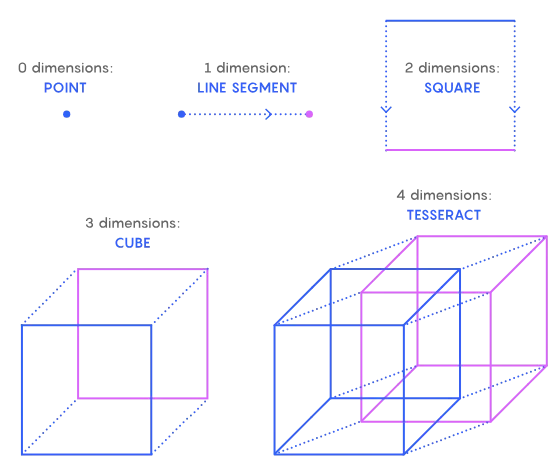
So when talking about the fourth dimension here, we’re referring to its definition in physics.
Back to the main story, this creates what physicists call "time-translation symmetry breaking." Just as regular crystals break the symmetry of empty space by creating preferred locations where atoms sit, time crystals break the symmetry of time by creating preferred moments when the system returns to its original state.
The Physics Behind the Impossibility
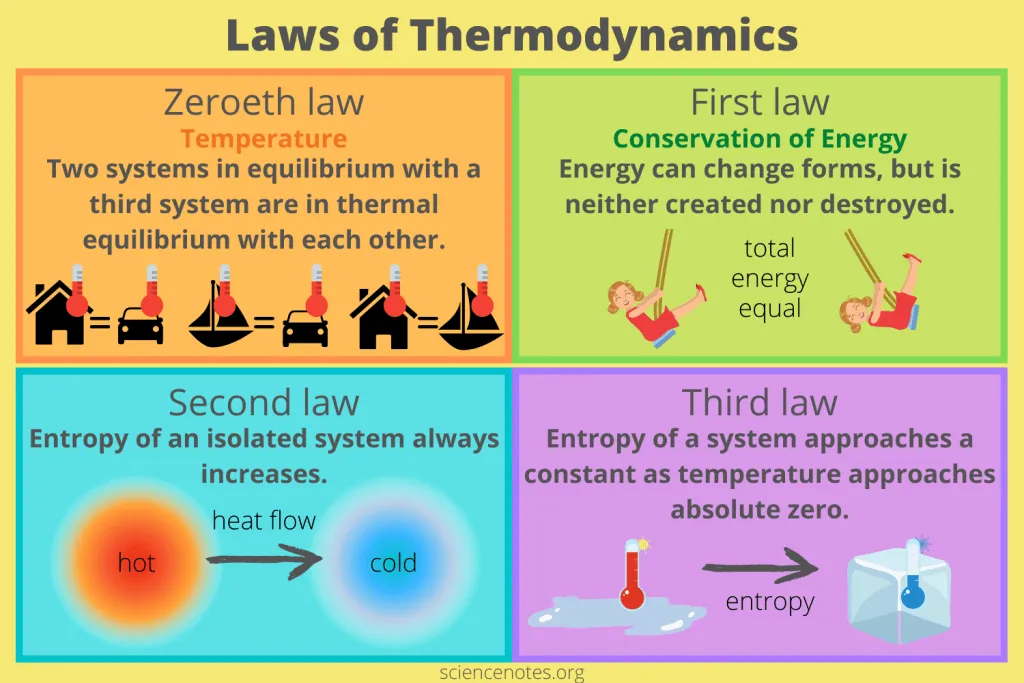
When Frank Wilczek first proposed time crystals, many physicists thought they were impossible. The concern stemmed from fundamental thermodynamic principles. If a system could maintain perpetual motion in its ground state, wouldn't this violate the laws of thermodynamics? Wouldn't it create a perpetual motion machine?
The key insight is that time crystals don't actually violate thermodynamics because they don't produce work. They oscillate in time, but they don't generate usable energy. Think of it like a spinning top that never slows down but can't be used to power anything else. The motion is there, but it's not convertible to useful work.
Time crystals exist in a state of non-equilibrium that's stable over time. Unlike normal systems that eventually reach thermal equilibrium and stop moving, time crystals maintain their temporal oscillations indefinitely. This is possible because they're isolated systems that don't exchange energy with their environment.
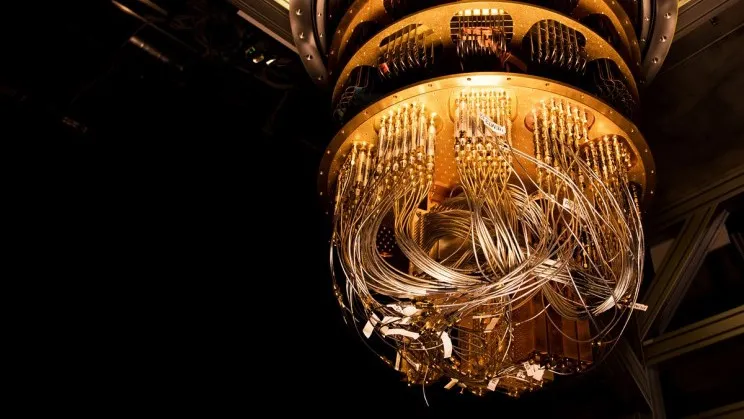
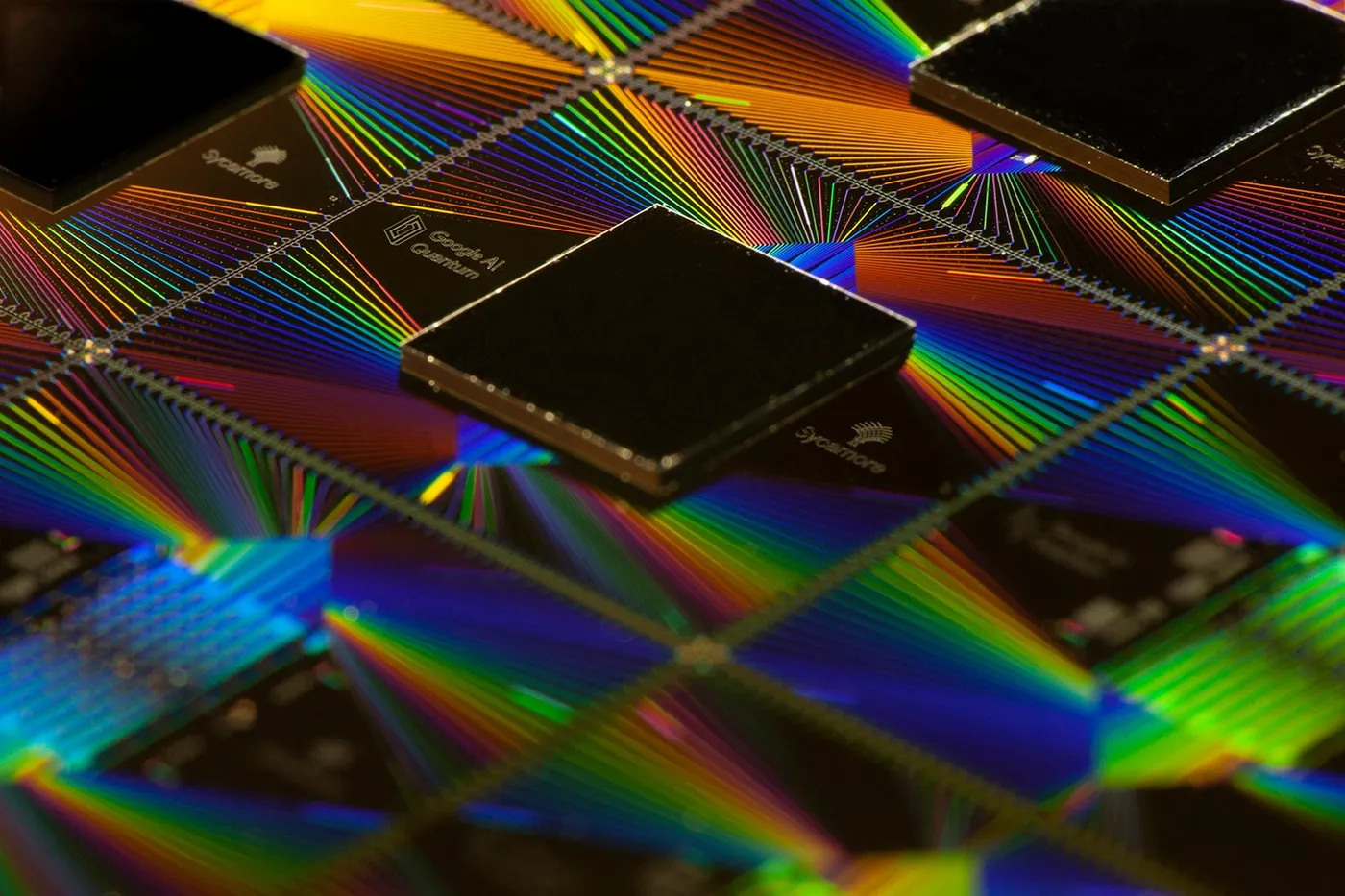
The experimental breakthroughs were rather swift. In 2021, Google researchers created a time crystal using their Sycamore quantum processor. They arranged 20 qubits in a chain and demonstrated that the system could maintain its time-crystalline behavior for hundreds of oscillation periods—a remarkable achievement for a quantum system.
Technological Potential And Challenges
Now, even though we know that Time Crystals do not really produce any kind of energy, we still might be able to utilize its nature.
To start off with, time crystals could serve as quantum memory devices, storing quantum information in their oscillating states. Their inherent stability against decoherence could make them ideal for building more robust quantum computers. The periodic nature of time crystals could also be used for quantum error correction protocols.
Moreover, the regular oscillations of time crystals could be used to create incredibly precise clocks. Since these oscillations occur at the quantum level and are resistant to external perturbations, time crystal clocks could potentially surpass even atomic clocks in accuracy.
Despite all these potentials, time crystals still face some significant challenges:
Decoherence: Like all quantum systems, time crystals are fragile and can be destroyed by interactions with their environment. Maintaining their coherence for extended periods requires extremely controlled laboratory conditions.
Scalability: Current time crystal experiments involve relatively small numbers of particles. Scaling up to larger systems while maintaining time-crystalline behavior remains a significant challenge.
Conclusion
Time crystals represent one of the most fascinating discoveries in modern physics. They challenge our understanding of fundamental physical principles while opening up new possibilities for technological applications. These exotic materials that oscillate in time without consuming energy seem to defy common sense, yet they've been experimentally realized in multiple laboratory settings.
As we continue to explore the properties and potential applications of time crystals, we're likely to discover even more surprising behaviors and useful applications. They may play a crucial role in the development of quantum computers, precision sensors, and other advanced technologies.
Read more at: Lazzerex’s Blog
Source: Published Notion page
This article
Post Reactions
Join the conversation
Write a Comment
Share your thought about this article.
Comments
Loading comments...